Why the Same Running Route Feels Different in Each Direction
Why the same running route feels different in each direction: read its slopes, sightlines, and landmarks to choose the loop that suits your mood.
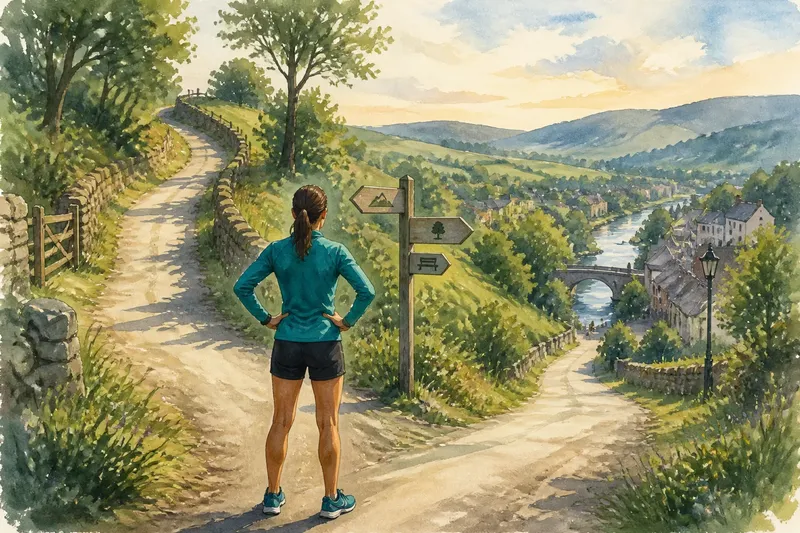
The same running route can feel like a climb one way and a release the other, even when your feet cover the same streets. Why the same running route feels different in each direction comes down to more than slope: your view, the sequence of landmarks, and the turns you meet all shape what the run asks of you.
That makes direction a useful choice, not a detail to settle by habit. A loop can be arranged for a gentle opening, a rewarding view near the end, or a sequence of recognizable cues that keeps attention moving. The best direction depends on what you want from that particular run.
Start with the day
Before choosing clockwise or counterclockwise, name the run’s purpose. You might want an easy outing, a route that holds your interest, or a familiar loop that feels manageable when you are tired. The same circuit can serve each aim differently because its features arrive in a different order.
Consider three broad situations:
- You want an easy start. Put the gentler grade and simpler turns first, then leave the steeper or busier stretch for later if that suits your effort.
- You want a mental lift. Arrange the route so an open view, park entrance, or favorite landmark arrives when you tend to need a fresh focus.
- You want a steady, predictable outing. Choose the direction with the clearest sequence of cues and the fewest ambiguous junctions.
These are preferences, not rules. If a direction makes a hill feel demanding or a crossing awkward, let that practical fact outweigh an appealing view. A route should fit your attention and conditions as well as your legs.
Read the gradients
A hill does not change shape when you reverse a loop, but its place in the run does. One direction may bring a gradual rise while you are fresh, followed by a descent that feels like a natural easing. Reverse it, and the climb may arrive after several turns, with the downhill section setting the tone at the start.
Think about the kind of effort you want to meet first. If a steep section makes it harder to settle into an easy rhythm, place it later or choose another direction. If you prefer to get the most demanding rise out of the way early, the reverse may feel more suitable. Neither choice makes the hill easier in itself; it changes the context in which you encounter it.
For an informal check, look at a map’s elevation profile if your mapping app provides one, then walk or run the loop at an unhurried pace. Notice where the grade begins, where it eases, and whether the road tilts gradually or changes abruptly. Pay attention to what follows the climb, too. A quiet, level stretch can offer a reset, while a busy junction may ask for concentration just as your effort is rising.
Imagine your familiar park loop begins with a long, gentle rise in one direction and saves a shorter, sharper hill for the other. If you want to warm into the outing, the gentle rise may fit; if you would rather face the sharper hill while fresh, reversing the loop may suit you. Either way, you can observe whether your breathing and attention settle where you hoped, then choose accordingly next time.
Follow the sightlines
Direction changes what appears ahead. On one approach, a path may reveal the park, a tree-lined bend, or a distant ridge. From the other side, the same feature may be hidden until you turn, or framed by a different stretch of street. These small shifts can make a familiar route feel open, enclosed, or more varied.
Notice whether you prefer to see what is coming or to let the route unfold. A clear view across a field can make the next stretch feel spacious. A bend that conceals the path may create a succession of small discoveries. Neither is inherently better; the useful question is which kind of attention suits the run you are planning.
Light and surroundings can also affect the view. A low sun may make one approach bright and another shadowed, while parked cars, seasonal foliage, or temporary work can change how easily you see a turn. If visibility or footing is poor, favor the direction with clearer approaches and simpler crossings. Treat sightlines as part of route choice, not merely decoration.
Try describing the loop as a set of views rather than a line on a map: open corner, narrow path, bridge, broad lawn, quiet street. Then ask which order would make the outing feel most inviting. That simple mental edit can be more useful than staring at the route outline alone.
Choose the landmark order
Landmarks work like punctuation. A water fountain, footbridge, mural, or distinctive tree can divide a loop into readable sections. In one direction, those cues may arrive at steady intervals; in the other, they may bunch together and leave a long stretch with little to notice.
If you find yourself checking the time or wondering how far remains, choose the direction that gives you recognizable markers along the way. A sequence such as bridge, playground, and garden gate can offer a clear sense of progress without requiring constant attention to a watch. If you enjoy a less segmented run, a longer uninterrupted stretch before the next landmark may feel calmer.
Landmarks can also provide a useful decision point. A path junction or public entrance gives you a place to decide whether to continue, shorten the outing, or take a different branch. Avoid treating a landmark as a promise that conditions will be the same every time; it is a cue for orientation, not a substitute for noticing your surroundings.
Say you have a riverside loop with a bridge, a busy plaza, and a quiet stretch under trees. If the plaza feels lively and distracting after you have settled into a rhythm, run the other way so it comes earlier and the wooded section arrives later. You would expect the same places to feel differently ordered, giving the quieter stretch a role as the run’s closing scene.
Which direction fits?
Which way should I run a hilly loop?
Choose the direction that places the climbs where you are most comfortable meeting them, and consider what follows each rise. A gradual opening climb may help you ease in, while a shorter, sharper hill may feel more manageable early if you prefer to tackle it while fresh.
Should I run toward the best view?
Run toward it if anticipating the view gives you a pleasant reason to keep moving, or save it for later if it makes a satisfying finish. Check the approach as well as the view itself: a scenic stretch is a poor fit if its turns or crossings demand attention that the surroundings make difficult.
How can I make a familiar loop feel new?
Reverse the direction and pay attention to the order of turns, slopes, and landmarks rather than trying to run faster. A route journal or a brief note in your phone can record what felt easier to read and which view you had missed from the usual approach.
What if both directions feel awkward?
Change the loop’s starting point or use a shorter out-and-back on the most appealing section. If a junction, crossing, or steep segment is the problem, leave it out rather than forcing the route to work in a direction that does not suit you.
Build a view-led loop
Planning by views and turns does not require a complicated route tool. Start with a place you want to see, then connect it to a clear turning point and a comfortable way back. A paper map, a phone map, or a familiar street directory can help you check that the line is coherent before you head out.
- Choose a feature. Pick a park entrance, waterfront path, hilltop opening, or other visible point that gives the outing a focus.
- Find a simple approach. Prefer streets or paths whose turns are easy to identify, especially where several paths meet.
- Place the demanding section deliberately. Decide whether a hill or exposed stretch belongs near the start, middle, or end of the loop.
- Arrange landmarks. Put memorable cues at useful intervals, and note any long stretch where the route offers little visual variety.
- Check the return. Make sure the final section has a clear way back and does not depend on a confusing junction or an inconvenient crossing.
- Try the reverse. Compare the order of views and turns. Keep the direction that feels more legible and better matched to the run’s purpose.
On the map, a loop may look balanced while one direction puts its busiest crossing at the end and the other places it near the beginning. That is a real distinction, even if the route line hardly changes. If a path is closed or a crossing has changed, adapt your plan rather than relying on an old mental picture; local signs and current conditions should guide your choice.
Let the route change
A familiar loop is not a fixed performance. Weather, light, crowds, and your own mood can make one direction more appealing on one day and less so on another. Keep a couple of options in mind: a direction for an easy opening, one that puts a favorite view later, and a shorter version if you want to stay close to home.
After a run, make a quick note of one thing: where the route began to feel good, or where attention became scattered. Over time, those observations help you select a direction without turning every outing into a planning project. The point is not to find one perfect arrangement, but to notice how gradients, sightlines, and landmarks shape the experience.
When you next choose a familiar loop, pick the direction that serves the run you want today. The same running route feels different in each direction because its story reaches you in a new order: first the slope, then the view, then the turn that tells you where you are.